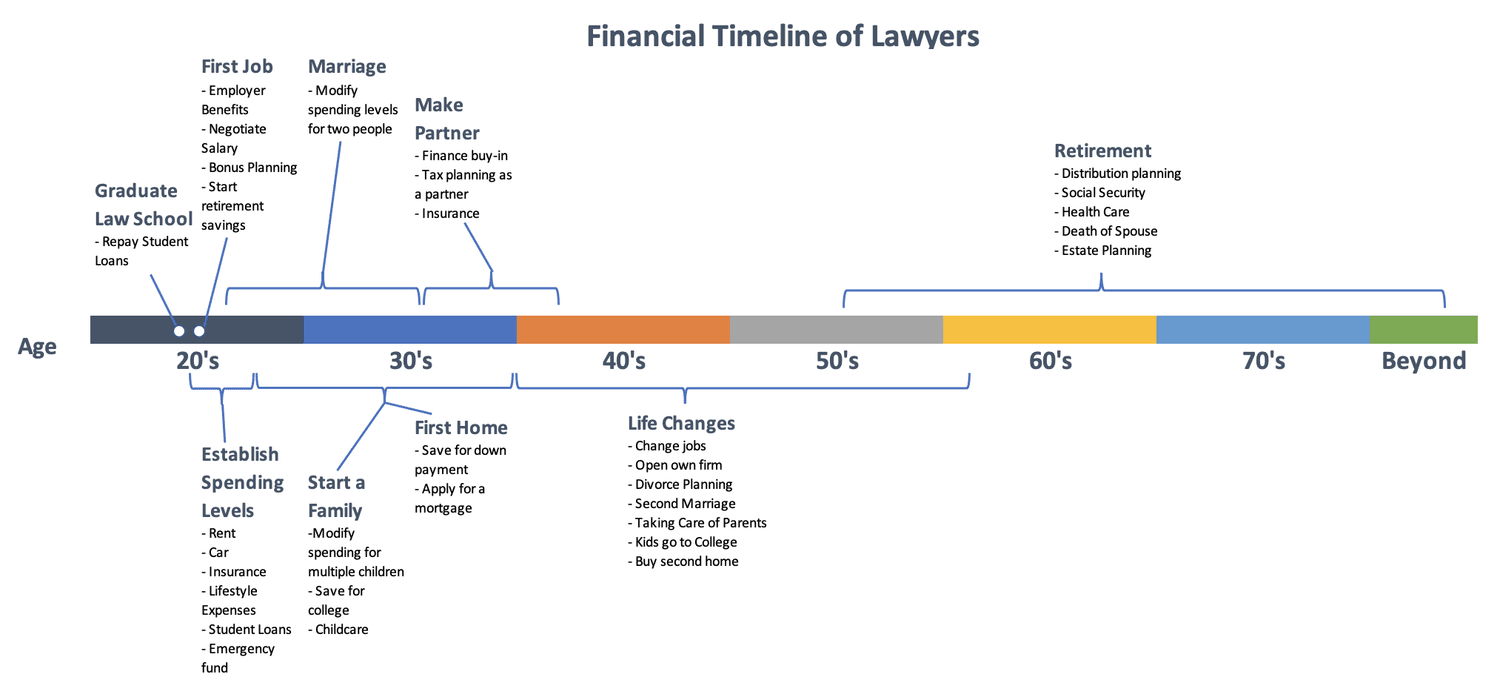
Over a lawyer's career, they will face a multitude of important financial decisions. Traditionally, financial advice was for those with a high net worth or for people near retirement. The problem is that a lawyer will have to make a lot of financial decisions before they achieve a level of financial success where they can access traditional financial advice. The takeaway is to be thoughtful when making financial decisions because these decisions, especially early in a law career, can have positive or negative consequences that can compound over decades.
Traditional financial advice has historically served people with a high net worth, which disproportionately helped older people nearing retirement. The problem is young professionals don't have the access to financial advice that they need, and without it can make financial mistakes early on that will negatively affect their financial future.
Consider two professionals: one is 5 years out of law school (25 years from retirement) and the other is 5 years from retirement. Both make a financial decision that reduces the annual growth of their net worth by 2% each year until retirement. The professional who is 5 years from retirement would end up with roughly a 9% lower net worth. The professional 5 years out of school would end up with roughly a 37% lower net worth. Making bad financial decisions when young has an outsized effect on your financial future.
Graduate law school
A lawyer's financial life starts after law school graduation, with the first decision being how to repay student loans: standard 10-year repayment, income-driven repayment plans, Public Student Loan Forgiveness, or private refinancing.
First job
The first job is filled with first-time financial decisions: maximizing employer benefits, starting retirement savings (aim to save 10-15% of income), negotiating salary, and planning for variable bonuses.
Establish spending levels
Lawyers are likely financially behind their undergraduate peers who started working instead of pursuing law school, and may feel pressure to spend to catch up. It's important to start careers with good spending patterns across rent (aim for no more than 30% of income), a car, insurance (health, homeowners/renters, auto, disability, life, liability), lifestyle expenses, student loans, and an emergency fund of 3-6 months of essential expenses.
Marriage
After marrying, lawyers need to account for a second income in their spending levels and have honest conversations around finances together. Disagreements about money is one of the main reasons for divorce.
Start a family
Starting a family brings decisions about one or two working spouses, childcare costs (over 50% of families who pay for childcare pay over $10,000/year), modified spending levels, and saving for college through 529 plans, Education Savings Accounts, UGMA/UTMA accounts, or traditional investment accounts.
First home
Buying a home is usually a better financial decision for lawyers who think they'll live there more than a few years. Lawyers need to determine an affordable monthly mortgage payment, save for a down payment, and account for maintenance and repairs previously covered by a landlord. See how much to save for a home.
Make partner
Becoming partner brings decisions about financing the buy-in (cash or loan), tax planning as an owner instead of a salaried employee, and updated insurance coverage for increased liability.
Life changes
Lawyers will experience many life changes throughout their lives — changing jobs, opening their own firm, divorce, remarriage, taking care of aging parents, kids going to college, and buying a second home. Each carries its own financial considerations and often requires adjusting spending levels and insurance coverage.
Retirement
Retirement is the point when a lawyer's assets can pay for all future expenses. Considerations include retirement distributions and their tax consequences, when to begin collecting Social Security (as early as 62, as late as 70), healthcare coverage through Medicare and supplemental insurance, the death of a spouse, and estate planning.
The financial life of a lawyer is filled with various financial decisions, each unique to the lawyer themselves. Developing Financial offers a comprehensive ongoing financial planning solution that offers anytime financial advice for young lawyers navigating these decisions.
Have questions of your own?
I’m not taking new ongoing clients right now, but I’m still glad to offer a free 30-minute Meet & Confer — to answer your questions, add you to the waitlist, or point you toward another advisor.